Environmental Sciences — Most Probable Questions
Complete High-Precision Solutions & Analytical Guide for the Uploaded Question Bank
Group A — 1 Mark Questions Very Short Answer Type (21 Questions)
1. What is meant by ecosystem?
An ecosystem is a self-regulating structural and functional unit of the biosphere consisting of a community of living organisms (biotic components: producers, consumers, decomposers) interacting with each other and with their non-living physical environment (abiotic components: air, water, soil, sunlight, temperature) as an integrated system through energy flow and nutrient cycling.
2. Define population growth.
Population growth is the change (increase or decrease) in the number of individuals of a particular species in a population over a specific period of time. Mathematically, it is governed by four demographic variables: birth rate ($B$), death rate ($D$), immigration ($I$), and emigration ($E$), expressed as: $$\Delta N = (B + I) - (D + E)$$
3. What is biodiversity?
Biodiversity (biological diversity) refers to the totality, variety, and variability of all life forms on Earth. It encompasses diversity across three fundamental biological levels: genetic diversity (variation of genes within a species), species diversity (variety of species within a region), and ecosystem diversity (diversity of habitats, communities, and ecological processes).
4. Name any two renewable energy resources.
Two major renewable energy resources are:
- Solar Energy: Radiant light and heat from the Sun harnessed using photovoltaic (PV) solar cells or solar thermal collectors.
- Wind Energy: Kinetic energy of atmospheric air currents converted into mechanical or electrical energy using wind turbines. (Other examples include hydroelectric energy, geothermal energy, and biomass).
5. What is carrying capacity in logistic population growth?
Carrying capacity (denoted by the symbol $K$) is the maximum biological population size of a species that a specific environment can sustainably support indefinitely, given the available food, habitat, water, and other essential resources without causing ecological degradation. When population density reaches $K$, the population growth rate ($\frac{dN}{dt}$) drops to zero.
6. Define food chain.
A food chain is a linear sequence of organisms in an ecological community through which nutrients and energy pass as one organism consumes another. It initiates with primary producers (photosynthetic autotrophs) and progresses through sequential trophic levels of consumers (herbivores $\rightarrow$ primary carnivores $\rightarrow$ apex predators) and terminates with decomposers. Example: $$\text{Grass (Producer)} \longrightarrow \text{Grasshopper (Herbivore)} \longrightarrow \text{Frog (Carnivore)} \longrightarrow \text{Snake (Apex Predator)}$$
7. What is COD?
COD (Chemical Oxygen Demand) is a standard water quality analytical metric that measures the total amount of oxygen required to chemically oxidize both organic (biodegradable and non-biodegradable) and oxidizable inorganic substances in a water sample using a strong chemical oxidizing agent (typically potassium dichromate, $\text{K}_2\text{Cr}_2\text{O}_7$, in a boiling 50% sulfuric acid medium). It is expressed in $\text{mg/L}$ or parts per million ($\text{ppm}$).
8. Define BOD.
BOD (Biochemical Oxygen Demand) is the amount of dissolved oxygen consumed by aerobic microorganisms to biologically assimilate and decompose the biodegradable organic matter present in a water sample at a specific temperature (standardized at $20^\circ\text{C}$) over a specified incubation period (standardized at 5 days, denoted as $\text{BOD}_5$). It serves as the primary indicator of organic pollution loading in aquatic bodies.
9. Mention any one source of air pollution.
Vehicular Exhaust Emissions (Transportation Sector): The internal combustion engines of motor vehicles running on fossil fuels (petrol and diesel) release vast amounts of primary air pollutants into the troposphere, including Carbon Monoxide ($\text{CO}$), Nitrogen Oxides ($\text{NO}_x$), Volatile Organic Compounds ($\text{VOCs}$), particulate matter ($\text{PM}_{2.5}$ and $\text{PM}_{10}$), and unburned hydrocarbons. (Other primary sources include thermal power plants, industrial smokestacks, and agricultural residue burning).
10. What is global warming?
Global warming refers to the long-term, progressive rise in Earth's average tropospheric and surface temperatures due to the enhanced greenhouse effect caused by anthropogenic emissions of greenhouse gases (primarily Carbon Dioxide $\text{CO}_2$, Methane $\text{CH}_4$, Nitrous Oxide $\text{N}_2\text{O}$, and Chlorofluorocarbons $\text{CFCs}$). These gases absorb and re-radiate outgoing infrared thermal radiation emitted by the Earth's surface, trapping heat within the atmosphere.
11. What is noise pollution?
Noise pollution is the propagation of excessive, unwanted, or disruptive acoustic sounds into the environment (typically exceeding $65\text{ dB}$ in residential zones or $85\text{ dB}$ in industrial workplaces) that adversely affects human health, disrupts normal physiological and cognitive functions (causing stress, hypertension, and hearing loss), and interferes with wildlife communication and navigation.
12. What is meant by biotic component of ecosystem?
Biotic components encompass all living biological organisms within an ecosystem that interact with one another and influence community structure. Based on their nutritional modes, they are categorized into three functional groups:
- Producers (Autotrophs): Photosynthetic plants and algae that convert solar energy into organic nutrients.
- Consumers (Heterotrophs): Animals (herbivores, carnivores, omnivores) that ingest other organisms for survival.
- Decomposers (Saprotrophs): Microorganisms (bacteria and fungi) that recycle nutrients by degrading dead organic matter.
13. Name the pollutant responsible for ozone depletion.
Chlorofluorocarbons (CFCs) (such as Freon-11 and Freon-12) are the primary anthropogenic synthetic pollutants responsible for stratospheric ozone depletion. Upon reaching the stratosphere, UV radiation dissociates CFCs to release atomic chlorine free radicals ($\text{Cl}^\bullet$), where a single chlorine atom can catalytically destroy up to 100,000 ozone ($\text{O}_3$) molecules. (Other ozone-depleting substances include Halons, Carbon Tetrachloride $\text{CCl}_4$, and Methyl Chloroform).
14. What is equivalent noise level?
Equivalent Continuous Noise Level ($L_{\text{eq}}$) is a steady-state sound level in decibels ($\text{dBA}$) that, over a specified integration period $T$, contains the exact same total acoustic energy as a time-varying, fluctuating acoustic noise level occurring over that same period. Its mathematical formulation is: $$L_{\text{eq}} = 10 \log_{10} \left[ \frac{1}{T} \int_0^T \frac{p^2(t)}{p_0^2} \, dt \right]$$ where $p(t)$ is the instantaneous sound pressure and $p_0$ is the reference sound pressure ($20\ \mu\text{Pa}$).
15. What is eutrophication?
Eutrophication is the ecological process by which a water body becomes overly enriched with dissolved nutrients—primarily nitrates ($\text{NO}_3^-$) and orthophosphates ($\text{PO}_4^{3-}$) from agricultural runoff, sewage effluents, and phosphate detergents. This nutrient loading stimulates explosive hyper-productivity of algae and surface weeds (algal blooms). The subsequent microbial decay of dead algae consumes vast amounts of dissolved oxygen, leading to aquatic hypoxia/anoxia and the mass mortality of fish and aquatic life.
16. What is meant by solid waste?
Solid waste refers to any useless, unwanted, or discarded non-liquid and non-gaseous material arising from human and animal activities. It encompasses municipal garbage, industrial refuse, biomedical sludges, construction and demolition debris, agricultural residue, and electronic waste (e-waste) that have been abandoned by the generator as having no immediate economic value.
17. What is meant by environmental impact assessment (EIA)?
Environmental Impact Assessment (EIA) is a formal, anticipatory analytical planning process used to identify, predict, evaluate, and mitigate the potential environmental, socio-economic, and health consequences of a proposed major development project (e.g., dams, highways, industrial plants) prior to major decision-making and project approval.
18. What is doubling time in exponential population growth?
Doubling time ($T_d$) is the exact time required for a population undergoing continuous exponential growth at a constant growth rate ($r$) to double its initial population size ($2N_0$). From the exponential growth model $N(t) = N_0 e^{rt}$, setting $N(T_d) = 2N_0$ yields: $$T_d = \frac{\ln 2}{r} \approx \frac{0.693}{r}$$ Using the demographic Rule of 70, if the annual growth rate is expressed as a percentage ($P\%$), the doubling time in years is approximately: $$T_d \approx \frac{70}{P\%} \text{ years}$$
19. Why was the Environmental Protection Act established?
The Environmental Protection Act (EPA, 1986 in India) was enacted by Parliament under Article 253 of the Constitution in the immediate aftermath of the catastrophic Bhopal Gas Tragedy (1984) and to fulfill India's commitments at the 1972 UN Stockholm Conference on the Human Environment. It was established to provide an overarching, unified legal framework for the protection and improvement of environmental quality, to regulate the handling of hazardous chemical substances, to establish national environmental discharge standards, and to empower authorities to initiate stringent legal action against polluting industries.
20. What is meant by renewable resource?
A renewable resource is a natural resource that can replenish or regenerate itself through natural biological, solar, or geological cycles at a rate equal to or greater than its rate of consumption by humans. Because their renewal velocity outpaces depletion, they do not face permanent exhaustion over reasonable human timescales. Examples include solar radiation, wind currents, flowing water, biomass, and geothermal heat.
21. Define logistic population growth.
Logistic population growth is a realistic model of biological population expansion where the per capita growth rate decreases linearly as population density approaches the environmental carrying capacity ($K$) due to resource limitations (food, space, competition). It produces a characteristic S-shaped (sigmoidal) growth curve governed by the differential equation: $$\frac{dN}{dt} = rN \left( \frac{K - N}{K} \right)$$ where $r$ is the intrinsic rate of natural increase, $N$ is population size, and $K$ is carrying capacity.
Group B — 5 Mark Questions Short Answer Type (13 Questions)
1. Derive the mathematical equation for exponential population growth.
Core Theorem: Under ideal environmental conditions with unlimited food, space, and no predation or disease, a biological population grows continuously at a constant proportional rate, resulting in the exponential curve: $$\mathbf{N(t) = N_0 e^{rt}}$$
Step-by-Step Mathematical Derivation:
- Let $N(t)$ represent the population size at any time $t$, and let $N_0$ be the initial population size at time $t = 0$.
- Let $b$ be the instantaneous per capita birth rate and $d$ be the instantaneous per capita death rate (assuming immigration and emigration balance each other out: $I = E$).
- The absolute rate of change of population size ($\frac{dN}{dt}$) over an infinitesimal time interval $dt$ is equal to the total births minus total deaths during that interval: $$\frac{dN}{dt} = bN - dN = (b - d)N$$
- Let $r = b - d$, where $r$ is defined as the intrinsic rate of natural increase (or Malthusian parameter). Substituting $r$ into the equation yields the fundamental differential equation for exponential growth: $$\frac{dN}{dt} = rN$$
- To solve this first-order linear differential equation, separate the variables $N$ and $t$: $$\frac{1}{N} \, dN = r \, dt$$
- Integrate both sides from the initial conditions ($t = 0, N = N_0$) to time $t$ when population is $N(t)$: $$\int_{N_0}^{N(t)} \frac{1}{N} \, dN = \int_0^t r \, dt$$
- The definite integral of $\frac{1}{N}$ is the natural logarithm ($\ln N$): $$\ln N(t) - \ln N_0 = r(t - 0)$$ $$\ln \left( \frac{N(t)}{N_0} \right) = rt$$
- Taking the exponential of both sides (raising base $e$ to the power of both sides) to eliminate the logarithm: $$\frac{N(t)}{N_0} = e^{rt}$$ $$\mathbf{N(t) = N_0 e^{rt}}$$
Ecological Significance: When plotted on a standard linear graph, this equation generates a characteristic J-shaped growth curve. The population exhibits a brief lag phase followed by an explosive, accelerating growth phase. However, exponential growth is an idealized theoretical model; in real ecosystems, it is only observed temporarily (e.g., bacteria colonizing a new nutrient broth or an invasive species entering an uninhabited habitat) before environmental resistance checks the growth.
2. Explain logistic population growth with carrying capacity.
In natural ecosystems, no population can grow exponentially indefinitely. As population density increases, essential resources such as food, water, breeding territory, and light become scarce. This increasing scarcity generates environmental resistance (competition, predation, parasitism, and disease), which lowers birth rates and elevates death rates. To model this realistic feedback mechanism, Pierre-François Verhulst (1838) formulated the Logistic Growth Model.
Concept of Carrying Capacity ($K$):
The carrying capacity ($K$) represents the maximum sustainable population size of a species that a specific physical and biological environment can support indefinitely without degrading the resource base. It acts as an ecological asymptote.
The Verhulst-Pearl Logistic Differential Equation:
The logistic model introduces a density-dependent damping factor to the exponential growth equation: $$\frac{dN}{dt} = rN \left( \frac{K - N}{K} \right) \quad \text{or} \quad \frac{dN}{dt} = rN \left( 1 - \frac{N}{K} \right)$$ Where:
- $\frac{dN}{dt}$ = Rate of population change with respect to time.
- $r$ = Intrinsic rate of natural increase (maximum per capita growth rate).
- $N$ = Current population size.
- $K$ = Carrying capacity of the environment.
- $\left( \frac{K - N}{K} \right)$ = The unutilized opportunity for population growth (fraction of carrying capacity still available).
Mathematical Analysis of Growth Phases:
- When $N \ll K$ (Early Stage): The fraction $\frac{N}{K}$ is very close to $0$, making $\left(1 - \frac{N}{K}\right) \approx 1$. Thus, $\frac{dN}{dt} \approx rN$. The population grows exponentially without constraint (Lag and Exponential Phase).
- When $N = \frac{K}{2}$ (Inflection Point): The population reaches half of its carrying capacity. At this precise point, the absolute rate of population increase ($\frac{dN}{dt}$) is at its absolute maximum. This is the optimal harvesting yield point in wildlife and fisheries management.
- When $N \to K$ (Deceleration & Asymptotic Stage): As $N$ approaches $K$, the term $(K - N)$ approaches zero, making $\left(1 - \frac{N}{K}\right) \to 0$. Consequently, $\frac{dN}{dt} \to 0$. Population growth slows down and stabilizes, fluctuating slightly around carrying capacity.
Figure 1: Comparison between Exponential (J-shaped) growth and Logistic (S-shaped) population growth regulated by carrying capacity ($K$).
3. Describe the causes and effects of water pollution.
Water pollution is the contamination of water bodies (lakes, rivers, oceans, aquifers, and groundwater) by chemical, physical, radioactive, or pathogenic microorganisms that alter the natural quality of water, making it toxic and unfit for human consumption, agricultural use, or aquatic life survival.
A. Major Causes and Sources of Water Pollution:
- Industrial Effluents: Manufacturing industries (chemical plants, tanneries, textile mills, paper pulp factories, metal refineries) discharge untreated or inadequately treated wastewater containing highly toxic heavy metals (Mercury $\text{Hg}$, Lead $\text{Pb}$, Cadmium $\text{Cd}$, Arsenic $\text{As}$, Chromium $\text{Cr}^{6+}$), cyanides, phenols, and synthetic organic solvents directly into adjacent rivers.
- Domestic Sewage and Municipal Waste: Untreated human fecal matter, urine, laundry detergents, and organic food refuse from urban cities are dumped into watercourses. This raw sewage carries a massive biological oxygen demand (BOD) load and pathogenic microbes.
- Agricultural Runoff: Modern intensive agriculture relies heavily on synthetic chemical fertilizers (urea, superphosphates) and chemical pesticides (organochlorines like DDT, endosulfan, herbicides, and fungicides). Irrigation and rainwater leach these soluble residues into surface water and groundwater aquifers.
- Oil Spills and Marine Dumping: Accidental ruptures of offshore oil drilling rigs, tanker shipwrecks, and ballast water discharge release crude oil slicks into oceans. An oil slick coats the surface, preventing atmospheric oxygen diffusion and sunlight penetration.
- Thermal Pollution: Thermal and nuclear power plants utilize river or ocean water as a coolant to condense steam. The heated water is discharged back into the natural water body, raising the ambient water temperature and significantly lowering dissolved oxygen levels (since gas solubility decreases with rising temperature).
B. Severe Environmental and Health Effects:
- Impact on Human Health (Waterborne Diseases & Toxicoses): Ingestion of pathogen-contaminated water triggers severe gastrointestinal epidemics including Cholera (Vibrio cholerae), Typhoid fever (Salmonella typhi), Amoebic dysentery, and Hepatitis A. Furthermore, chemical toxicity causes devastating historical syndromes:
- Minamata Disease: Neurological syndrome caused by methylmercury poisoning from eating contaminated fish in Minamata Bay, Japan.
- Itai-Itai Disease: Painful bone softening and kidney failure caused by Cadmium ($\text{Cd}$) contamination of rice fields in Japan.
- Blue Baby Syndrome (Methemoglobinemia): Caused by drinking groundwater contaminated with agricultural nitrates ($\text{NO}_3^-$), which bind to infant hemoglobin and prevent oxygen transport.
- Eutrophication and Algal Blooms: Nutrient loading from phosphate detergents and nitrogen fertilizers causes explosive algal blooms. When these algae die, aerobic decomposer bacteria multiply and deplete Dissolved Oxygen ($\text{DO}$), suffocating fish and creating aquatic "dead zones."
- Bioaccumulation and Biomagnification: Persistent non-biodegradable toxins (like DDT and PCBs) are absorbed by aquatic organisms (bioaccumulation) and become progressively concentrated at each successive higher trophic level in the food chain (biomagnification), leading to reproductive failure in apex predators like fish-eating birds.
4. What are the advantages and disadvantages of landfilling of solid waste?
Sanitary landfilling is the most widely utilized municipal solid waste (MSW) disposal method globally. It involves the controlled, scientific burial of compacted solid waste in engineered geological depressions lined with impermeable materials to isolate the waste from the surrounding environment.
| Advantages of Sanitary Landfilling | Disadvantages & Environmental Risks |
|---|---|
| 1. Economically Cost-Effective: Landfilling requires significantly lower capital investment and operational expenditure compared to advanced thermal waste-to-energy incineration plants or pyrolysis facilities. | 1. Groundwater Contamination (Leachate): If the impermeable basal synthetic liner (HDPE) or clay seal ruptures, toxic liquid leachate—containing dissolved heavy metals, ammonia, and toxic organics—seeps into subterranean aquifers, permanently poisoning groundwater. |
| 2. High Volume Flexibility: Landfills can handle massive volumes and highly heterogeneous mixtures of municipal waste without requiring rigorous pre-sorting or segregation of waste types. | 2. Greenhouse Gas Emissions: Anaerobic decomposition of organic waste by methanogenic bacteria generates large volumes of Landfill Gas (LFG), comprising ~50–60% Methane ($\text{CH}_4$) and ~40% $\text{CO}_2$. Methane is a potent greenhouse gas with a global warming potential 28–36 times higher than $\text{CO}_2$. |
| 3. Energy Recovery Potential (Biomethanation): Modern engineered sanitary landfills install gas extraction wells to capture landfill methane gas ($\text{CH}_4$), which is burned in turbines to generate electricity or upgraded to renewable natural gas (RNG). | 3. Land Scarcity & NIMBY Syndrome: Landfills require vast tracts of valuable land area. They face intense public opposition—known as the "Not In My Back Yard" (NIMBY) syndrome—due to foul odors, scavenging birds, rodent infestations, and depreciation of local property values. |
| 4. Land Reclamation & Repurposing: Once a landfill cell reaches maximum capacity, it is capped with impermeable clay, topsoil, and vegetation. Completed sites can be reclaimed and converted into public recreational parks, golf courses, or solar energy farms. | 4. Long-term Maintenance Liabilities: Landfills are not permanent disposal; they are waste storage tombs. Even after closure, landfill sites require continuous environmental monitoring of leachate collection and gas venting systems for 30 to 50 years. |
| 5. Vector & Odor Control: Applying a daily compacted soil cover (6 inches deep) over discarded waste prevents vector breeding (rats, flies, mosquitoes), minimizes wind-blown litter, and suppresses foul odor emissions. | 5. Loss of Valuable Resources: Burying recyclable materials (paper, plastics, aluminum, glass) and compostable organic matter destroys embodied energy and valuable raw materials that could otherwise enter a circular recycling economy. |
5. Describe different methods of solid waste management.
An effective solid waste management system follows the Integrated Solid Waste Management (ISWM) Hierarchy, prioritizing waste minimization at the source before treatment and final disposal. The six primary scientific methods are:
-
Source Reduction and Reuse (Waste Prevention):
The most ecologically sustainable approach (top of the hierarchy). It involves designing products with minimal packaging, manufacturing durable goods, banning single-use plastics, and promoting industrial symbiosis where one industry's waste stream becomes another's raw material feedstock. -
Recycling and Material Recovery:
The systematic collection, sorting, cleaning, and reprocessing of discarded materials (paper, PET/HDPE plastics, aluminum cans, ferrous metals, and glass bottles) into secondary raw materials for manufacturing new products. Recycling significantly conserves virgin natural resources, saves energy, and reduces landfill dependency. -
Composting (Aerobic Biological Treatment):
The controlled biochemical decomposition of biodegradable organic waste (food scraps, vegetable peels, yard waste) by thermophilic aerobic microorganisms (bacteria, actinomycetes, and fungi) in the presence of oxygen. The process generates heat ($55^\circ\text{C}$–$65^\circ\text{C}$, destroying pathogens and weed seeds) and converts unstable organic matter into stable, dark, nutrient-rich organic manure called compost (humus), which improves soil fertility and water retention. -
Sanitary Landfilling:
The scientific burial of residual, non-recyclable solid waste in engineered trenches lined with impermeable composite liners (High-Density Polyethylene over compacted bentonite clay) to prevent leachate seepage into groundwater. Equipped with leachate collection pipes, methane gas venting wells, and daily topsoil compaction. -
Incineration (Thermal Waste-to-Energy Combustion):
The controlled combustion of organic and combustible waste at extremely high temperatures ($850^\circ\text{C}$ to $1100^\circ\text{C}$) in specialized furnaces. Incineration reduces waste volume by 85–90% and mass by 70–75%. The intense thermal energy generated is used to produce high-pressure steam that drives turbines for electricity generation. Precaution: Requires advanced air pollution control systems (baghouse fabric filters, electrostatic precipitators, lime scrubbers) to neutralize toxic acid gases and capture highly carcinogenic dioxins and furans. -
Biomethanation (Anaerobic Digestion):
A biological treatment where organic waste is digested by anaerobic bacteria in an oxygen-free, sealed reactor (digester). The process yields high-calorific Biogas ($\sim 60\% \text{ Methane}, 40\% \text{ CO}_2$) used for cooking or electricity, and leaves behind a nutrient-rich digested bioslurry used as high-grade organic biofertilizer.
6. Explain the concept and objectives of Environmental Impact Assessment (EIA).
A. Concept of EIA:
Environmental Impact Assessment (EIA) is a formalized, systematic, and regulatory environmental management tool used to predict, analyze, and evaluate the environmental, socio-economic, cultural, and human health impacts of a proposed major development project (such as mining operations, hydroelectric dams, expressways, ports, and chemical plants) prior to granting environmental clearance and financial commitments. EIA operates on the fundamental international environmental guideline: "The Precautionary Principle" (anticipating and preventing environmental harm before it occurs rather than attempting remediation later).
B. Core Objectives of EIA:
- Predictive Environmental Evaluation: To forecast the nature, magnitude, duration, and reversibility of potential environmental impacts (both beneficial and adverse) on air quality, water resources, biodiversity, soil, and local climate.
- Mitigation and EMP Formulation: To propose concrete preventive, remedial, and compensatory mitigation measures formulated into a binding Environmental Management Plan (EMP) (e.g., installing effluent treatment plants, developing greenbelt acoustic barriers, or executing compensatory afforestation).
- Promotion of Sustainable Development: To harmonize economic growth with ecological sustainability, ensuring that natural resources are utilized within their regenerative carrying capacity without compromising future generations.
- Public Stakeholder Participation: To ensure transparency and democratic governance by conducting mandatory Public Hearings, giving local indigenous communities, project-affected families, and environmental NGOs a legal platform to voice concerns and influence project designs.
- Informed Decision-Making: To provide regulatory approving authorities (e.g., the Ministry of Environment, Forest and Climate Change - MoEFCC in India) with comprehensive, objective scientific data to either approve a project with environmental safeguards, recommend structural modifications, or outright reject ecologically catastrophic proposals.
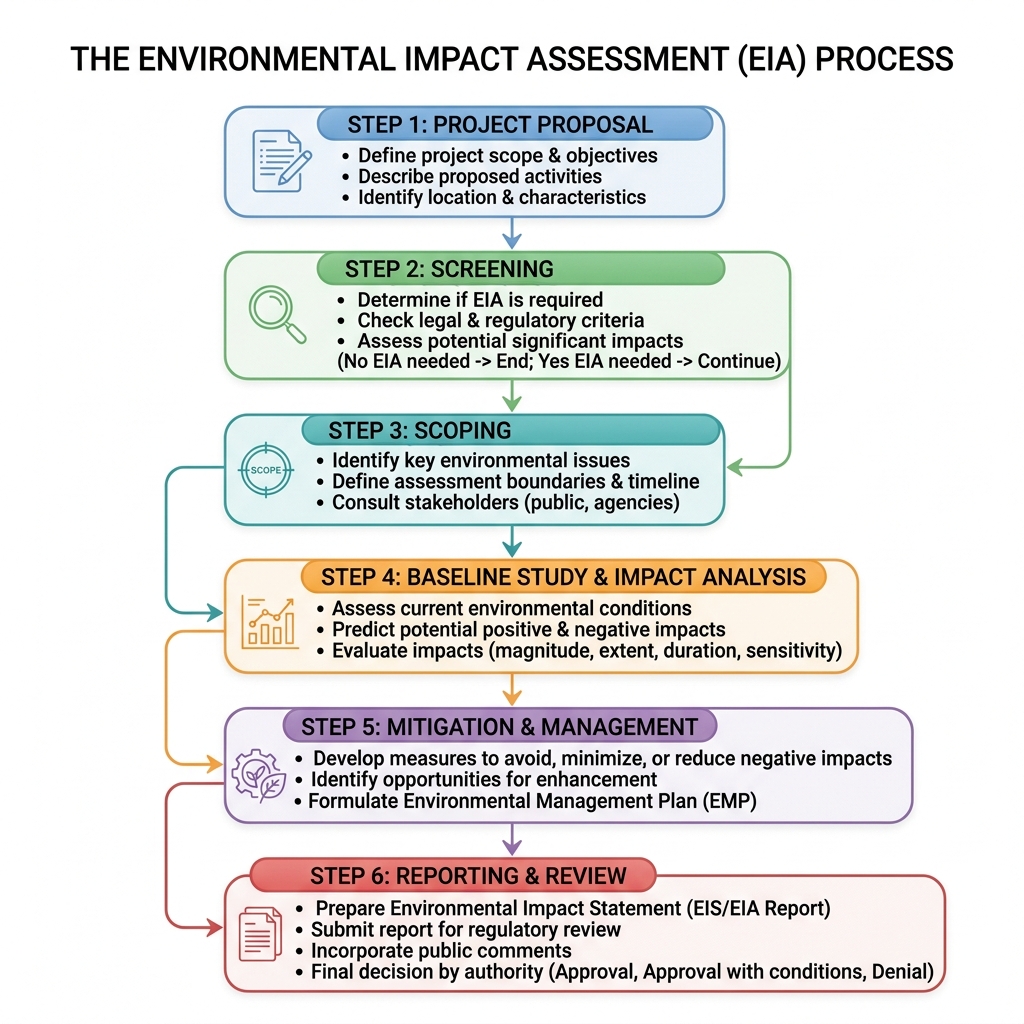
Figure 2: Sequential stages of the Environmental Impact Assessment (EIA) regulatory workflow from project screening to post-project monitoring.
7. Differentiate between BOD, COD, and DO.
Dissolved Oxygen (DO), Biochemical Oxygen Demand (BOD), and Chemical Oxygen Demand (COD) are three interrelated water quality parameters used to evaluate organic pollution loading and the health of aquatic ecosystems.
| Parameter | Dissolved Oxygen (DO) | Biochemical Oxygen Demand (BOD) | Chemical Oxygen Demand (COD) |
|---|---|---|---|
| Definition | The actual concentration of free, non-compound oxygen gas ($O_2$) dissolved in water available for aquatic respiration. | The amount of dissolved oxygen consumed by aerobic microorganisms to biologically assimilate biodegradable organic matter. | The amount of oxygen required by a strong chemical oxidant to chemically oxidize both organic and oxidizable inorganic matter. |
| Nature of Process | Physical dissolution and photosynthetic oxygen generation. | Biological / Enzymatic oxidation by living aerobic bacteria. | Purely chemical oxidation using strong chemical reagents. |
| Substances Measured | Measures available life-support oxygen gas ($O_2$). | Measures only biodegradable organic matter (e.g., proteins, carbohydrates, sewage). | Measures biodegradable + non-biodegradable organic matter (e.g., plastics, dyes, cellulose) + oxidizable inorganics ($\text{Fe}^{2+}, \text{S}^{2-}$). |
| Time Required | Rapid analysis: 5 to 15 minutes (Winkler titration or DO meter). | Slow bioassay: 5 days at $20^\circ\text{C}$ ($\text{BOD}_5$) or 3 days at $27^\circ\text{C}$. | Rapid analytical test: 2 to 3 hours of thermal refluxing. |
| Reagents / Agents | Manganous sulfate, alkali-iodine-azide, sodium thiosulfate. | Natural indigenous aerobic microorganisms (seed bacteria). | Potassium dichromate ($\text{K}_2\text{Cr}_2\text{O}_7$) in boiling 50% $\text{H}_2\text{SO}_4$ with silver sulfate catalyst. |
| Relative Magnitude | High in pristine water ($>6\text{ mg/L}$); low in polluted water. | Always lower than COD ($\text{BOD} < \text{COD}$). | Always higher than BOD ($\mathbf{\text{COD} > \text{BOD} > \text{DO}}$ in polluted water). |
| Environmental Significance | Direct indicator of aquatic life survival ($<4\text{ mg/L}$ causes fish suffocation). | Indicates municipal/domestic sewage pollution load and biological treatment efficiency. | Indicates total industrial chemical toxicity and overall organic/inorganic pollution load. |
8. Discuss the principle of BOD test.
A. Fundamental Principle:
The Biochemical Oxygen Demand (BOD) test is an empirical bioassay that measures the mass of dissolved oxygen consumed by aerobic microorganisms as they assimilate and metabolize carbonaceous biodegradable organic matter in a water sample under standardized isothermal and dark conditions over a specified incubation duration.
Why Standardize at 5 Days and $20^\circ\text{C}$ ($\text{BOD}_5$)?
At a controlled temperature of $20^\circ\text{C}$, aerobic bacteria oxidize approximately 68% of the total carbonaceous organic matter within 5 days ($\text{CBOD}_5$). Incubating beyond 5 to 7 days triggers the proliferation of slow-growing nitrifying bacteria (Nitrosomonas and Nitrobacter), which begin oxidizing ammonia into nitrates (Nitrification / Nitrogenous BOD), which would distort the measurement of organic carbon waste. Dark incubation prevents indigenous algae in the water sample from conducting photosynthesis and producing oxygen, which would offset bacterial oxygen consumption.
B. Step-by-Step Test Methodology:
- Dilution Water Preparation: Highly purified, aerated distilled water is saturated with oxygen and buffered with essential trace nutrients and minerals ($\text{Phosphate buffer, Magnesium sulfate } \text{MgSO}_4, \text{Calcium chloride } \text{CaCl}_2, \text{Ferric chloride } \text{FeCl}_3$) to sustain microbial growth. If the test water (e.g., industrial effluent) lacks bacteria, it is seeded with a standardized microbial culture (like aged sewage supernatant).
- Sample Preparation: A known volume of the polluted water sample is mixed with the dilution water in airtight $300\text{ mL}$ glass BOD bottles (with water seals to prevent atmospheric oxygen entry).
- Initial DO Determination ($\text{DO}_1$): The dissolved oxygen concentration of one set of bottles is measured immediately on Day 0 using the standard Winkler Iodometric Titration Method or a calibrated dissolved oxygen electrode.
- Dark Incubation: A duplicate set of identical BOD bottles is placed inside a dark BOD incubator maintained precisely at $20^\circ\text{C} \pm 1^\circ\text{C}$ for exactly 5 days.
- Final DO Determination ($\text{DO}_5$): At the conclusion of the 5-day incubation period, the residual dissolved oxygen concentration in the incubated bottles is measured.
C. Mathematical Calculation Formula:
Standard Unseeded BOD Formula: $$\mathbf{\text{BOD}_5 \ (\text{mg/L}) = \frac{\text{DO}_1 - \text{DO}_5}{P}}$$
Where:
• $\text{DO}_1$ = Initial dissolved oxygen concentration ($\text{mg/L}$) on Day 0.
• $\text{DO}_5$ = Final dissolved oxygen concentration ($\text{mg/L}$) after 5 days of incubation.
• $P$ = Volumetric decimal dilution factor $= \frac{\text{Volume of undiluted water sample (mL)}}{\text{Total volume of diluted mixture (300 mL)}}$.
If Seeded Dilution Water is used: $$\text{BOD}_5 = \frac{(\text{DO}_1 - \text{DO}_5) - (\text{B}_1 - \text{B}_5)f}{P}$$ where $\text{B}_1$ and $\text{B}_5$ are the initial and final DO of a separate seed control bottle, and $f$ is the ratio of seed volume in the sample to seed volume in the control.
9. Write a brief note on eutrophication.
A. Definition and Etymology:
Derived from the Greek words eu (meaning "well" or "good") and trophos (meaning "nourishment"), Eutrophication is the ecological process by which an aquatic ecosystem (lakes, reservoirs, slow-moving rivers, estuaries) becomes progressively enriched with dissolved chemical nutrients—specifically macronutrients containing Nitrogen ($\text{N}$ - Nitrates) and Phosphorus ($\text{P}$ - Orthophosphates). This nutrient loading triggers excessive primary productivity, fundamentally altering the structural and functional balance of the aquatic community.
B. Classification of Eutrophication:
- Natural Eutrophication: A slow, geological aging process taking thousands of years. Natural surface runoff gradually deposits sediments and mineral nutrients into oligotrophic (nutrient-poor) lakes, transforming them over centuries into mesotrophic, then eutrophic lakes, and eventually into terrestrial marshes and dry meadows.
- Cultural (Anthropogenic) Eutrophication: A rapid, human-accelerated process occurring over mere decades. Driven by excessive nutrient discharges from chemical N-P-K agricultural fertilizers, livestock feedlot runoff, untreated municipal sewage, and sodium tripolyphosphate (STPP) builders in laundry detergents.
C. Step-by-Step Ecological Mechanism (The Eutrophication Cascade):
- Nutrient Loading: Surplus nitrates and phosphates enter the aquatic ecosystem via surface runoff and effluent pipes. Phosphorus typically acts as the primary limiting nutrient in freshwater lakes.
- Algal Bloom & Hyper-productivity: The sudden abundance of nutrients removes growth constraints, triggering explosive multiplication of microscopic phytoplankton, blue-green cyanobacteria (e.g., Microcystis, Anabaena), and floating surface macrophytes (e.g., Water Hyacinth Eichhornia crassipes). This phenomenon is termed an Algal Bloom.
- Light Attenuation (Shading Effect): The dense, foul-smelling algal scum forms a thick green canopy across the water surface. This blocks penetration of sunlight into deeper layers. Submerged Aquatic Vegetation (SAV) beneath the surface cannot perform photosynthesis, dies, and uproots.
- Mass Microbial Decomposition: Algae have short life cycles. As massive populations of algae and underwater plants die, they sink to the lake bottom. Aerobic saprophytic bacteria multiply exponentially to decompose this enormous accumulation of organic detritus.
- Severe Hypoxia and Anoxia: During decomposition, the aerobic bacteria consume massive quantities of Dissolved Oxygen ($\text{DO}$). The DO concentration in the water column plummets below the critical survival threshold ($<2\text{ mg/L}$), creating widespread hypoxic or anoxic conditions.
- Ecological Collapse & Dead Zones: Aquatic fauna requiring high oxygen levels—such as fish, crustaceans, and benthic invertebrates—suffocate and die en masse. As oxygen is completely exhausted, anaerobic bacteria take over decomposition, releasing toxic, foul-smelling gases including Hydrogen Sulfide ($\text{H}_2\text{S}$, rotten egg odor), Methane ($\text{CH}_4$), and Ammonia ($\text{NH}_3$). The biological lake collapses into a foul, lifeless "Dead Zone."
D. Control and Mitigation Strategies:
Mitigation requires advanced tertiary wastewater treatment (chemical precipitation of phosphates using alum or lime), banning phosphate-based laundry detergents, establishing riparian vegetated buffer strips around farmlands to intercept agricultural runoff, artificial mechanical lake aeration, and biomanipulation (introducing top predator fish to feed on planktivorous fish, allowing zooplankton populations to recover and graze down the algal blooms).
10. Describe different kinds of solid waste.
Solid wastes are classified systematically based on their originating source, physical/chemical properties, and environmental hazard potential:
A. Classification Based on Origin (Source):
- Municipal Solid Waste (MSW): Everyday trash and refuse generated by residential households, commercial shops, offices, schools, and institutions. It comprises food scraps, paper, cardboard, plastics, glass bottles, metal cans, textiles, and yard trimmings.
- Industrial Solid Waste: Inorganic and organic residual discards generated by manufacturing, processing, and chemical industries. Examples include blast furnace slag from steel mills, fly ash from coal-fired thermal power plants, chemical sludges, textile dye residues, and metal scrap.
- Biomedical / Hospital Waste: Highly infectious, anatomical, and pathological waste generated during medical diagnosis, treatment, research, and immunization in hospitals, clinics, and laboratories. It includes hypodermic needles, syringes, scalpels, human anatomical body parts, blood-soaked bandages, microbiological cultures, and discarded pharmaceuticals.
- Electronic Waste (E-Waste): End-of-life discarded electrical and electronic equipment (EEE) including computers, mobile phones, printed circuit boards, televisions, refrigerators, and batteries. E-waste contains a hazardous mix of toxic heavy metals (Lead $\text{Pb}$, Mercury $\text{Hg}$, Cadmium $\text{Cd}$, Beryllium $\text{Be}$) and brominated flame retardants alongside valuable precious metals (Gold, Silver, Copper).
- Construction and Demolition (C&D) Waste: Inert rubble, concrete blocks, broken bricks, timber, gypsum drywall, asphalt, and plumbing fixtures resulting from building excavation, civil construction, remodeling, and structural demolition.
- Agricultural & Forestry Waste: Harvest residues including crop stubble (rice and wheat straw), sugarcane bagasse, farmyard cattle manure, forestry logging slashes, and discarded pesticide containers.
B. Classification Based on Biological and Chemical Properties:
- Biodegradable Waste (Organic): Waste materials capable of being broken down and decomposed by microbial enzymatic action (bacteria and fungi) into simpler inorganic compounds ($\text{CO}_2, \text{H}_2\text{O}, \text{methane}$, and humus) over a short duration. Examples: food waste, garden leaves, paper, cotton fabrics.
- Non-Biodegradable Waste (Inorganic): Synthetic polymers and mineral materials that resist enzymatic microbial decomposition and persist unchanged in the environment for decades or centuries. Examples: polyethylene plastics, styrofoam, glass, tin cans, synthetic rubber.
C. Classification Based on Hazard Level:
- Hazardous Waste: Wastes possessing intrinsic chemical or physical characteristics—specifically Toxicity, Ignitability (flammability), Corrosivity ($\text{pH} \le 2$ or $\ge 12.5$), or Reactivity/Explosiveness—that pose substantial present or potential hazard to human health or living organisms. Examples: industrial solvents, cyanide wastes, heavy metal sludges, acid baths, and radioactive waste.
- Non-Hazardous Waste: Standard domestic refuse and inert building rubble that do not exhibit direct chemical toxicity or flammability.
11. If the present population of the world is 8 billion, calculate the population after 25 years at a growth rate of 1% per year.
This demographic projection can be solved mathematically using two standard demographic models: the Continuous Exponential Growth Model (standard in ecological sciences) and the Discrete Compound Annual Growth Model.
Given Demographic Parameters:
• Initial World Population ($N_0$) = $8\text{ billion} = 8 \times 10^9$
• Time Period ($t$) = $25\text{ years}$
• Annual Growth Rate ($r$) = $1\% \text{ per annum} = \frac{1}{100} = 0.01\text{ year}^{-1}$
Method 1: Continuous Exponential Growth Model ($N(t) = N_0 e^{rt}$)
In biological populations where reproduction occurs continuously year-round without discrete breeding seasons, the continuous exponential equation applies:
1. State the formula: $$N(t) = N_0 \cdot e^{r \cdot t}$$
2. Substitute the given values into the equation: $$N(25) = 8 \times e^{(0.01 \times 25)} \text{ billion}$$ $$N(25) = 8 \times e^{0.25} \text{ billion}$$
3. Evaluate the mathematical constant $e^{0.25}$: $$e^{0.25} \approx 1.2840254$$
4. Calculate the final population: $$N(25) = 8 \times 1.2840254 = \mathbf{10.2722\text{ billion}}$$
Under continuous compounding, the world population will reach approximately 10.27 billion.
Method 2: Discrete Annual Compounding Model ($N(t) = N_0 (1 + r)^t$)
If population growth is compounded discretely at the end of each census year:
1. State the annual compounding formula: $$N(t) = N_0 \times (1 + r)^t$$
2. Substitute the given values: $$N(25) = 8 \times (1 + 0.01)^{25} \text{ billion}$$ $$N(25) = 8 \times (1.01)^{25} \text{ billion}$$
3. Evaluate $(1.01)^{25}$: $$(1.01)^{25} \approx 1.282432$$
4. Calculate the final population: $$N(25) = 8 \times 1.282432 = \mathbf{10.2595\text{ billion}}$$
Under annual compounding, the world population will reach approximately 10.26 billion.
Conclusion Summary: At a steady 1% annual growth rate over 25 years, the global population will expand by approximately 2.26 billion people, reaching 10.27 billion (continuous growth) or 10.26 billion (discrete compounding).
12. Explain the role of decomposers in ecosystem functioning.
Who are Decomposers?
Decomposers (comprising saprotrophs like bacteria, actinomycetes, and fungi, alongside detritivores such as earthworms, millipedes, woodlice, and dung beetles) are heterotrophic organisms that derive their biochemical energy and nutritional requirements by degrading complex organic macromolecular compounds from dead plant litter, animal carcasses, shed leaves, and fecal excretions (detritus).
Essential Functional Roles in Ecosystem Dynamics:
- 1. Biogeochemical Cycling and Mineralization (The Earth's Clean-up Crew):
Decomposers secrete extracellular hydrolytic enzymes (such as cellulases, proteases, chitinases, and ligninases) directly onto dead organic detritus. These enzymes digest insoluble complex organic polymers outside the organism's body into simpler soluble organic compounds, which are absorbed. During this process, decomposers perform Mineralization—converting organic carbon, nitrogen, phosphorus, and sulfur back into inorganic mineral ions ($\text{CO}_2, \text{NH}_4^+, \text{NO}_3^-, \text{PO}_4^{3-}, \text{SO}_4^{2-}, \text{H}_2\text{O}$). Without decomposers, primary producers (green plants) would rapidly exhaust all available soil mineral nutrients, causing global photosynthesis and life to halt permanently! - 2. Prevention of Organic Debris Accumulation:
Decomposers prevent the Earth's surface from becoming buried under an accumulating tomb of dead plant logs, fallen leaves, and animal carcasses. By functioning as natural biological scavengers, they maintain environmental sanitation and space availability for new living organisms. - 3. Humus Formation (Humification):
During microbial decomposition, incomplete enzymatic degradation of resistant compounds (like lignin and waxes) synthesizes Humus—a dark-brown, amorphous, highly stable organic colloid. Humus is vital for agricultural soil fertility: it binds soil particles into aggregates, dramatically enhances soil water-holding capacity, increases soil cation exchange capacity (CEC), and acts as a slow-release nutrient reservoir. - 4. Driving the Detritus Food Chain (DFC):
Decomposers initiate the Detritus Food Chain (DFC), which operates alongside the Grazing Food Chain (GFC). In terrestrial ecosystems (like forests), over 80% of net primary production (NPP) is not consumed by herbivores but falls to the forest floor as dead detritus. Decomposers assimilate this energy, and are in turn preyed upon by secondary detritivorous predators (nematodes, mites, beetles, birds), ensuring maximum thermodynamic efficiency and energy conservation in the ecosystem. - 5. Regulation of Atmospheric Gases and Carbon Sequestration:
By liberating locked organic carbon as gaseous Carbon Dioxide ($\text{CO}_2$) through saprophytic respiration, decomposers continuously replenish the atmospheric carbon reservoir essential for plant photosynthesis, playing a master regulatory role in the global carbon cycle and climate homeostasis.
13. Discuss the structure and functions of an ecosystem.
An ecosystem is the functional and structural unit of nature where living biological communities interact with their physical and chemical environment, functioning together as a self-sustaining ecological system. The study of an ecosystem involves analyzing its structural architecture and its dynamic operational functions.
A. STRUCTURE OF AN ECOSYSTEM:
The structural framework of an ecosystem is determined by the composition of biological species and the physical organization of nutrients and energy across trophic tiers. It comprises two distinct, interdependent components:
1. Abiotic (Non-living Physical & Chemical) Components:
- Climatic Factors: Solar radiation (light intensity and photoperiod), ambient temperature, precipitation (rainfall), atmospheric humidity, and wind velocity.
- Edaphic (Soil & Geological) Factors: Soil texture, soil pH, topography, organic matter content, and soil moisture.
- Inorganic Substances: Essential chemical nutrients and gases circulating in biogeochemical cycles, including Water ($\text{H}_2\text{O}$), Carbon Dioxide ($\text{CO}_2$), Oxygen ($\text{O}_2$), Nitrogen ($\text{N}_2$), Nitrates ($\text{NO}_3^-$), and Phosphates ($\text{PO}_4^{3-}$).
- Organic Compounds: Carbohydrates, proteins, lipids, and humic substances that form the biochemical bridge between the biotic and abiotic realms.
2. Biotic (Living Biological) Components:
- Producers (Autotrophs — Trophic Level 1): Organisms capable of synthesizing their own complex organic food from simple inorganic raw materials. Primarily comprising photoautotrophs (green trees, shrubs, grasses, freshwater algae, and marine phytoplankton) utilizing chlorophyll and solar light energy: $$6\text{CO}_2 + 6\text{H}_2\text{O} \xrightarrow{\text{Sunlight, Chlorophyll}} \text{C}_6\text{H}_{12}\text{O}_6 + 6\text{O}_2$$ Also includes chemoautotrophs (sulfur and nitrifying bacteria) in deep-sea thermal vents.
- Consumers (Heterotrophs): Organisms unable to synthesize their own food, relying on ingesting other living or dead organisms:
- Primary Consumers (Herbivores — Trophic Level 2): Feed directly on producers (e.g., grasshoppers, cattle, deer, zooplankton).
- Secondary Consumers (Primary Carnivores — Trophic Level 3): Preying upon herbivores (e.g., frogs, insectivorous birds, small fishes).
- Tertiary Consumers (Apex Predators — Trophic Level 4/5): Top predators that feed on secondary carnivores and have no natural predators (e.g., tigers, lions, eagles, great white sharks).
- Omnivores: Ingest both plant autotrophs and animal prey (e.g., humans, bears, crows).
- Decomposers (Saprotrophs & Detritivores): Microorganisms (bacteria and fungi) that degrade dead organic detritus, recycling bound nutrients back to the abiotic soil and water.
3. Structural Attributes:
- Species Composition: The complete identification and enumeration of plant and animal species inhabiting the ecosystem.
- Stratification: The vertical layering of vegetation and organisms within a community based on light and humidity requirements (e.g., in a tropical rainforest: forest floor herb layer $\rightarrow$ understory shrubs $\rightarrow$ canopy trees $\rightarrow$ emergent giant trees).
B. FUNCTIONS OF AN ECOSYSTEM:
Ecosystem functions refer to the dynamic, continuous thermodynamic and biochemical interactions that maintain biological productivity, energy flow, and ecological stability. The four core functional processes are:
-
Productivity (Biomass Generation):
The rate at which radiant solar energy is captured and synthesized into organic biological biomass by autotrophs per unit area over time ($\text{g/m}^2\text{/year}$ or $\text{kcal/m}^2\text{/year}$).- Gross Primary Productivity (GPP): The total rate of photosynthesis and organic matter production by producers.
- Net Primary Productivity (NPP): The net rate of organic biomass accumulation remaining after subtracting the energy utilized by plants for their own cellular respiration ($R$): $$\mathbf{\text{NPP} = \text{GPP} - R}$$ NPP represents the actual food biomass available for consumption by heterotrophic herbivores and decomposers.
-
Energy Flow (Thermodynamics and Food Webs):
Driven by solar radiation, energy flows strictly unidirectionally through the ecosystem hierarchy (Sun $\rightarrow$ Producers $\rightarrow$ Herbivores $\rightarrow$ Carnivores $\rightarrow$ Decomposers). It is strictly governed by the Two Laws of Thermodynamics:- First Law (Conservation of Energy): Solar energy is transformed into chemical bond energy; it is neither created nor destroyed.
- Second Law (Entropy & Lindeman's 10% Law): At every trophic transfer along a food chain, approximately 90% of energy is lost as metabolic respiration heat, locomotion, and waste. Only about 10% of energy is transferred and stored as biomass in the next trophic level. This rapid energy dissipation restricts terrestrial food chains to 4 or 5 trophic levels and explains why the Pyramid of Energy is always strictly upright.
-
Biogeochemical Cycling (Nutrient Cycling):
Unlike solar energy which flows unidirectionally and is dissipated into space, essential chemical elements (C, H, O, N, P, S) circulate continuously in closed biological and geological loops between living organisms and the abiotic environment.- Gaseous Cycles: Carbon and Nitrogen cycles, where the primary nutrient reservoir is the atmosphere or ocean.
- Sedimentary Cycles: Phosphorus and Sulfur cycles, where the primary nutrient reservoir is Earth's rock crust and soil sediments.
-
Ecological Succession and Homeostasis:
- Succession: The predictable, orderly, and directional replacement of plant and animal communities over time following a disturbance (Primary vs. Secondary succession), culminating in a stable, diverse Climax Community in equilibrium with the regional climate.
- Homeostasis: The inherent cybernetic self-regulating feedback mechanism of an ecosystem that resists structural change and maintains a dynamic equilibrium (resilience and resistance) against external environmental perturbations.
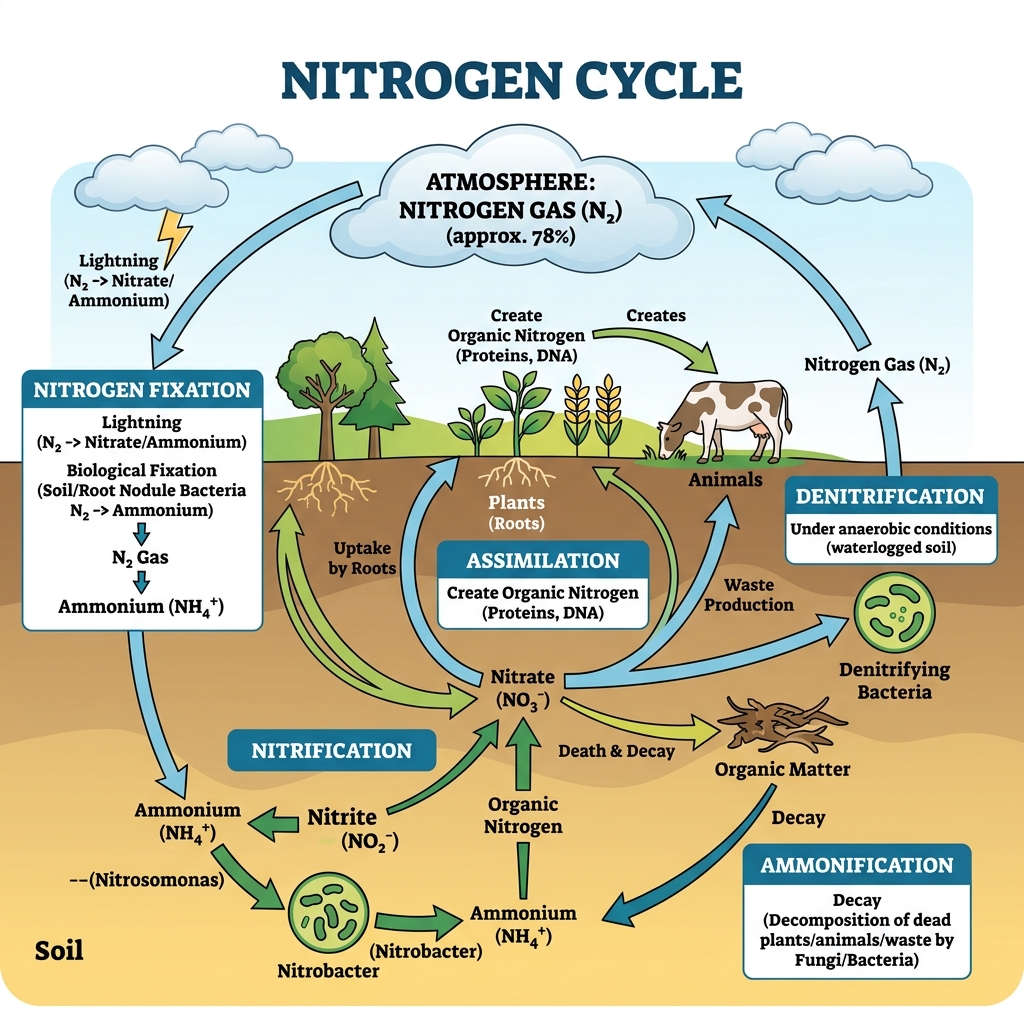
Figure 3: The Nitrogen Biogeochemical Cycle illustrating continuous nutrient recycling between abiotic reservoirs and biotic trophic levels in an ecosystem.